


The body stores what the mind cannot process. Movement gets it out.
Duration: 2 min | Modality: Movement | Mood: Lifted
How to practice
1. Stand with your feet hip-width apart. Knees slightly bent. Arms loose at your sides.
2. Begin to bounce gently through your knees. Not jumping -just a soft, rhythmic compression and release. Let your arms be completely limp. Let them swing with the movement.
3. After thirty seconds, let the shake move into your hands. Shake them loosely from the wrists as if you are trying to get water off your fingers.
4. Bring the shake into your shoulders. Let them roll and shudder. This will feel strange. Let it.
5. After another thirty seconds, let the movement move into your whole upper body. Your head can drop forward. Your jaw can be loose. Just shake.
6. Slow it down gradually over the final thirty seconds until you are still. Stand quietly for twenty seconds with your eyes closed. Notice what has changed.

Why this works
Shaking is a natural discharge mechanism for the nervous system. Animals shake instinctively after a threatening or overwhelming experience to release the physical charge that the stress response creates in the body. Humans have largely lost access to this instinct.
Somatic research documents how voluntary, rhythmic shaking allows the body to complete the stress cycle -to move energy through rather than holding it as tension in the muscles and fascia. Two minutes produces a measurable drop in physical tension and a consistent subjective report of feeling lighter, clearer, and more present.
Resources
- The Science of Shaking - Article on Healthline
- Somatic Movement to Stimulate the Nervous System - Article on Sage Journals
Inspiration
Trauma Release Exercises (TRE), developed by Dr. David Berceli, use induced tremoring to release deep muscular tension patterns held in the body from stress and overwhelm. The Energy Shake is a lighter, more accessible adaptation of this principle -using voluntary shaking rather than induced tremoring to produce a similar release effect.
The practice also draws from African and Indigenous movement traditions that use rhythmic full-body movement as a form of energetic clearing and communal reset. The insight shared across all of these traditions is simple: the body knows how to discharge what it is holding. You just have to let it.
Helpful tools
• Bare feet if possible -the sensory contact with the floor grounds the movement
• Two uninterrupted minutes where you will not feel self-conscious -a bathroom, a bedroom, outside
• Music with a strong rhythm if you want something to shake to -it helps the movement feel less clinical
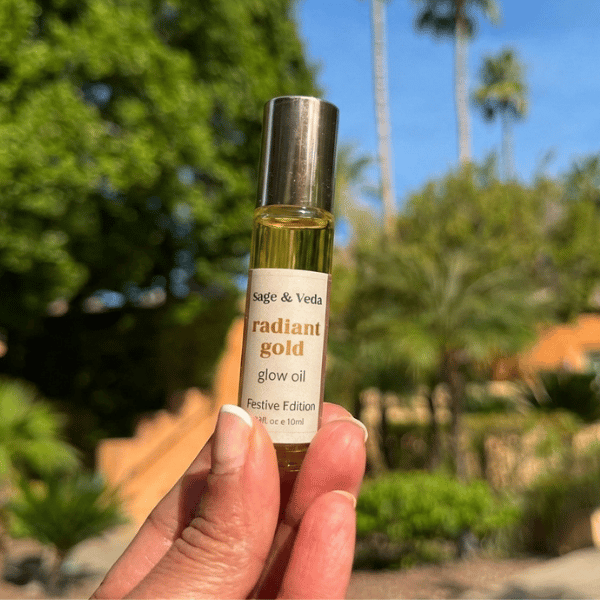
• Radiant Gold Roll-On -applying to the wrists after the practice, when the body is warm and open, is one of the most effective ways to absorb the scent and its mood effects
When to use this
After a long period of sitting still. When you feel agitated but cannot identify why. When low energy is showing up as a heavy, leaden feeling in the body rather than sleepiness. When you need to shift your state quickly and nothing subtle is working.
FAQ
This feels ridiculous. Am I doing it right?
Yes. The feeling of absurdity is part of the process. The practices that release the most tension are often the ones that feel the most undignified. If you are shaking and it feels strange, that is the body doing something it has been waiting to do. Stay with it for the full two minutes.
Can children do this?
Children do this naturally and instinctively -watch a child after they fall down or have a frightening experience and you will often see spontaneous shaking or full-body movement as the nervous system discharges. The practice is appropriate for all ages. Children often find it easier than adults because they have less learned inhibition around physical expression.

Join the conversation
Be the first to share your thoughts.