



Lift begins at the horizon.
Duration: 20 sec | Modality: Vision | Mood: Lifted
How to practice
- Find something at least 20 feet away. A window, a wall at the end of a corridor, a tree across the street. Distance is the only requirement.
- Soften your gaze. You are not staring or focusing on a specific point. Let your eyes settle and your peripheral vision open - take in the full field of view rather than drilling into a single detail.
- Hold for 20 seconds without shifting your focus back to anything close.
- Let your jaw unclench. Let your shoulders drop. Notice what happens in your chest.
- Come back to what you were doing.

Inspiration
The Eye Reset draws from two areas of research: the neuroscience of visual attention and its relationship to stress arousal, and the broader body of restorative environment studies, which have consistently shown that exposure to distant visual fields - particularly natural ones - reduces cortisol and activates the parasympathetic nervous system.
The insight at the centre of both is the same. Your brain is reading your visual environment as information about whether you are safe. Close, confined, high-detail focus signals effort and alertness. Distance signals space, and space signals ease.
We chose this as a LIFTED practice specifically because the shift it produces is not sedating - it is clarifying. The nervous system moves from compressed and reactive to open and capable. That is a different quality of feeling than calm. It is more like being handed back a version of yourself that has more room to think.
Resources
- Andrew Huberman - Episode 5: "How to Focus to Change Your Brain" - YouTube Video
- The restorative benefits of nature: Toward an integrative framework - Article by Journal of Environmental Psychology
Helpful tools
- Any fixed point at least 20 feet away - that is genuinely all you need
- A window, if you are indoors, to give your eyes actual depth to settle into
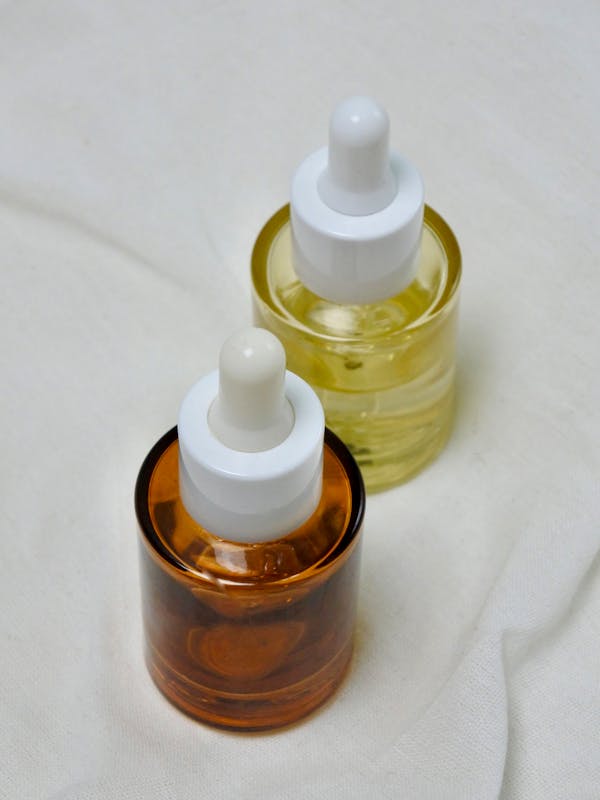
- Radiant Gold Roll-On applied to the wrists before you begin - the scent reaches your olfactory system while your visual field is open, and both inputs land in a nervous system already moving toward ease
When to use this
Mid-afternoon when the screen blur starts. Before a call you need to show up well for. After an hour of concentrated close work. Any moment you feel subtly compressed, slightly flat, or like you have lost access to the wider version of yourself.
It works indoors. It works in a meeting room, a car, a waiting room. Outdoors is better when you have the option, because the visual field genuinely opens and natural light adds a secondary stimulus. But distance is the mechanism. The scenery is a bonus.
FAQ
Does it need to be 20 feet exactly? No. The principle is simply that you are shifting out of close-focus mode - anything beyond arm's reach begins to engage panoramic vision. Further is better, but the threshold is low.
Why does my focus keep pulling back to nearby things? Because that is what close-focus mode does - it pulls. The reset works partly because you are asking your visual system to do something it has been trained out of. If your gaze keeps snapping back, you are doing it right. Hold the distance anyway.
Can I do this more than once a day? Yes, and you probably should. Every 45 to 90 minutes of screen-focused work, a 20-second reset is not indulgent - it is maintenance. The nervous system does not accumulate the benefits into a reserve. It needs the interruption regularly.


Join the conversation
Be the first to share your thoughts.